

The Philippines, an archipelagic country characterized by diverse and geographically dispersed communities, includes the Province of Iloilo in the Western Visayas region. Located in the northern part of the province is District 5, which is composed of eleven (11) municipalities. However, the core implementation of the Scale-Up Cervical Cancer Elimination through Secondary Strategies – Focusing on Asia Pacific (SUCCESS–FAP) program is concentrated in three priority municipalities—Lemery, Estancia, and Carles—identified due to the presence of unserved, underserved areas, and geographically isolated and disadvantaged areas (UUA–GIDA).
Geographically, District 5 extends from Lemery in the western portion, characterized by upland and interior barangays, to Estancia, a coastal municipality that serves as the commercial and service center of northern Iloilo, and further to Carles in the northeast, the province’s northernmost municipality with island and coastal communities. The geographic diversity and access challenges across these municipalities underscore the importance of the SUCCESS–FAP program in ensuring equitable access to cervical cancer screening and preventive health services, particularly for women aged 30-49 years old, in remote and vulnerable communities.
On December 9, 2025, the first Facilitators’ Training for the SUCCESS–FAP program officially commenced in Lemery, Iloilo. The activity was facilitated by representatives from the Department of Health – Western Visayas Center for Health Development (DOH WV CHD), the Iloilo Provincial Health Office, doctors and staffs of the Western Visayas Medical Center (WVMC), Lemery Primary Care Facility (PCF) staffs and the Municipal Health Officer (MHO), Lemery Barangay Health Workers (BHWs), and the Cancer Warriors Foundation, Inc. (CWFI), led by its CEO, Mrs. Carmen Auste, together with her staffs.
The program formally began at 8:00 AM with an opening prayer, followed by the presentation of objectives and a leveling of expectations facilitated by the WVMC team, to ensure a common understanding of the program goals and expected training outcomes. During this session, Lemery identified eleven (11) key expectations for the facilitators’ training, as follows:
- Mastery of the subject matter.
- Proper handling of specimens and appropriate referral to higher-level facilities.
- Teamwork among facilitators and trainees.
- Cooperation and coordination of the attendees.
- Active and effective trainers.
- Fast learners among trainees to allow early and efficient discussions.
- Increased knowledge on cervical cancer screening.
- Updated information and new learnings.
- Punctuality and patience toward one another.
- Proper storage and handling of clean kits and collected specimens.
- Familiarization with coaching techniques in performing the HPV-DNA test.
These expectations served as the foundation for a productive and collaborative training environment, aligning all participants toward the successful implementation of the SUCCESS–FAP program.
Following the opening activities, the WVMC team delivered comprehensive lectures on Human Papillomavirus (HPV), cervical cancer, and HPV-DNA testing, including the rationale for selecting Lemery, Estancia, and Carles as priority implementation sites. The team also discussed the masterlisting process and provided step-by-step guidance on the proper completion of required program forms.
While the training sessions were ongoing, Sir Ralph Jason Fuentes of PHO conducted a focused coaching session for the Lemery encoder/data manager, Sir Gaudencio J. Sepanton III, on the use of the IScerv Registration System and the Field Health Services Information System (FHSIS), which will serve as the primary data systems for program monitoring and reporting.
After the lunch break, an open forum was conducted to allow participants to raise questions, seek clarifications, and address implementation concerns. Once all issues were clarified, the activity concluded with a mini-rollout involving two (2) volunteer participants, providing a hands-on opportunity to practice screening procedures and the proper handling of kits and specimens in a real-time setting.
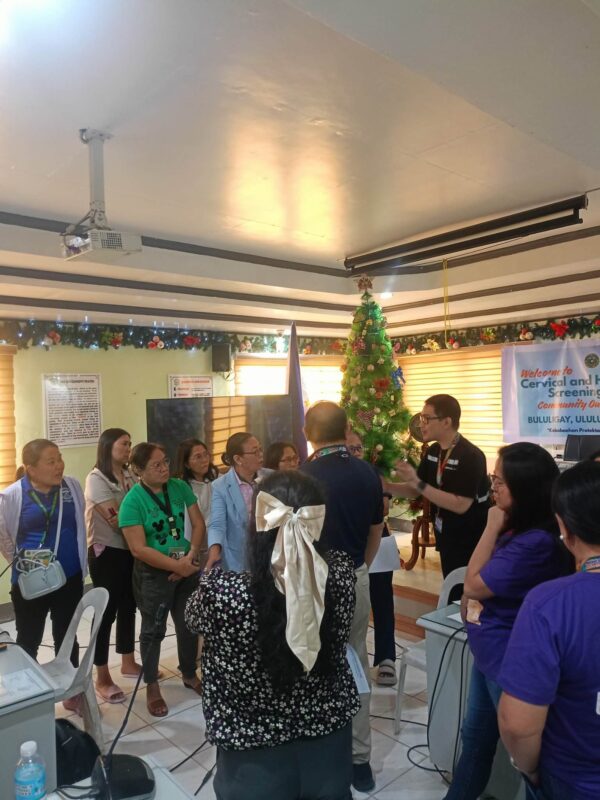
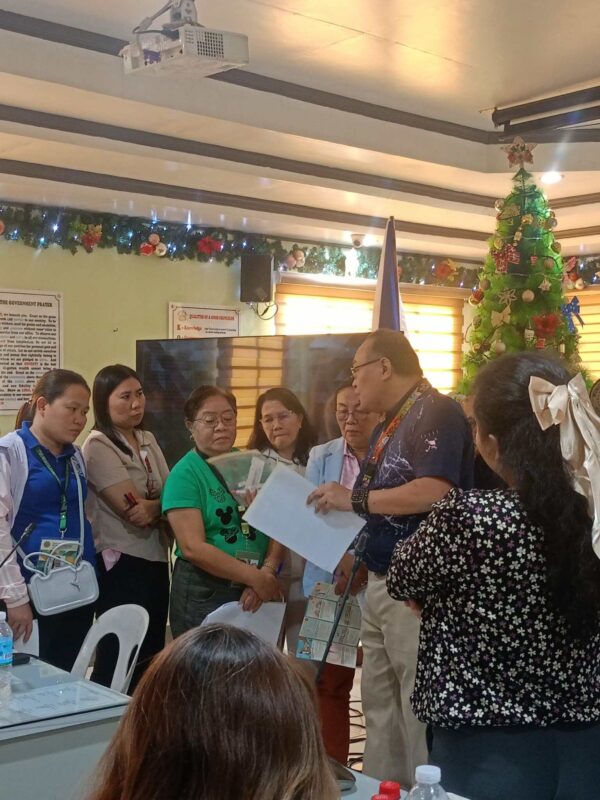
The Facilitators’ Training concluded at 4:30 PM with the awarding of Certificates of Appreciation to all individuals who contributed their time and support to the successful conduct of the activity together with Mayor Oscar C. Villegas Jr.
On December 10, 2025, the Facilitators’ Training continued for the municipality of Estancia, focusing on its Barangay Health Workers (BHWs), RHU nurses and midwives, and the Municipal Health Officer (MHO). Similar to the previous day’s session in Lemery, the training commenced with an opening prayer, followed by a discussion of program objectives and expectations to ensure alignment among participants.
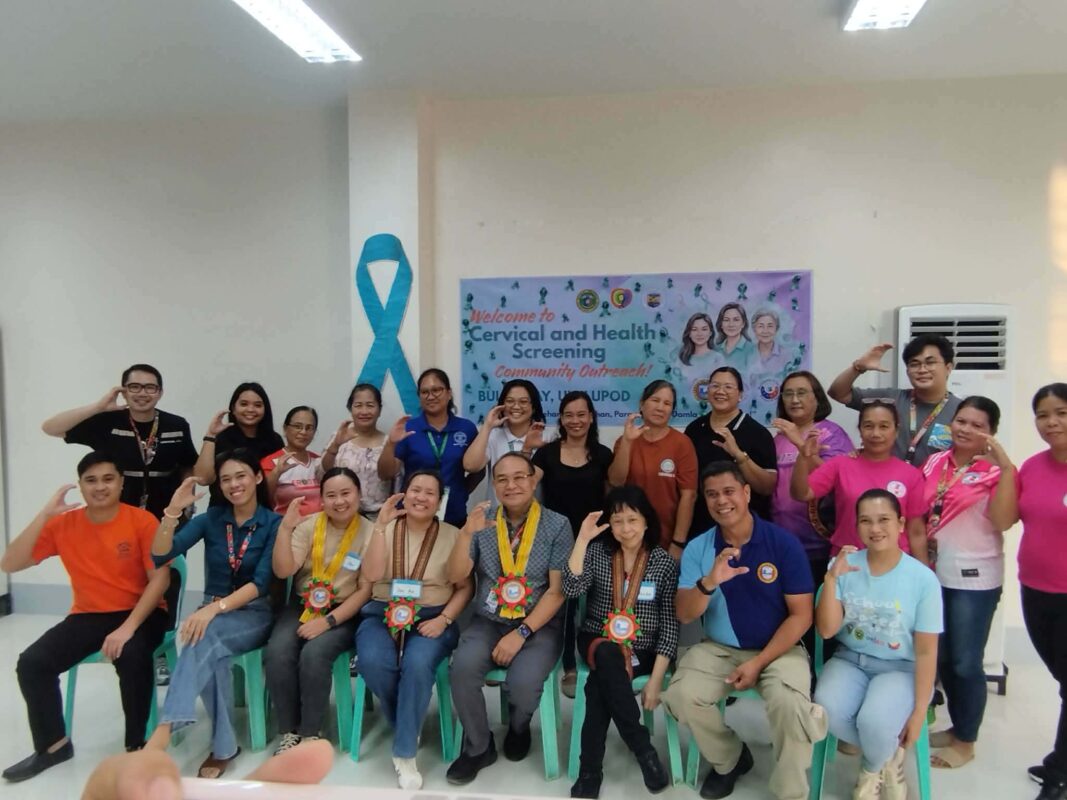
During this session, Estancia identified eight (8) key expectations for the facilitators’ training:
- Improve knowledge on cervical cancer screening.
- Gain deeper understanding of cervical cancer.
- Learn updated training methods and screening procedures related to cervical cancer.
- Receive clear and concise teaching.
- Ensure the training was interactive.
- Expect that trainers would explain and deliver all details clearly, including causes and symptoms of cervical cancer, while fostering teamwork to enhance program implementation.
- Have opportunities to be assessed or tested.
- Promote cooperation among participants.
These expectations served as a guide for the training facilitators to provide a productive, engaging, and practical learning experience tailored to the needs of Estancia’s health personnel.
Later, the Western Visayas Medical Center (WVMC) team provided lectures on Human Papillomavirus (HPV), cervical cancer, and HPV-DNA testing, while also guiding participants through the masterlisting process and the proper completion of required program forms.
During the session, Sir Ralph Jason Fuentes conducted hands-on, joint coaching for the encoder/data managers of Estancia and Carles—Sir Jhon Ryan Diza Dela Torre for Estancia and Donna D. Flores for Carles—on the use of the IScerv Registration System and the Field Health Services Information System (FHSIS), ensuring their proficiency in the data management procedures required for the program.
After the lunch break, an open forum was held to address questions and clarify operational concerns. The training later included a practical mini-rollout involving four volunteer participants, which provided the trainees an opportunity to practice screening procedures and the handling of kits and specimens under real-time conditions.
The Facilitators’ Training concluded at 4:30 PM with the awarding of Certificates of Appreciation and Give-aways to all individuals who contributed their time and support to the successful conduct of the activity.
On December 11, 2025, the Facilitators’ Training continued for the municipality of Carles, attended by its Barangay Health Workers (BHWs), Carles Primary Care Facility (PCF) Staffs, and the Municipal Health Officer (MHO). The training commenced with an opening prayer, followed by a discussion of program objectives and leveling of expectations to ensure alignment among all participants.

During this session, Carles identified nine (9) key expectations for the facilitators’ training:
- At the end of the training, participants should be able to perform and understand the proper self-collection method.
- Participants were expected to listen attentively and cooperate throughout the session.
- To be provided with additional knowledge on cervical cancer.
- To gain overall knowledge relevant to cervical cancer screening and program implementation.
- To ensure that everyone remains open-minded during discussions and activities.
- To learn and apply the knowledge gained in order to improve program targets.
- To conduct sessions in a concise manner with active participation from all attendees.
- For facilitators to be brief and clear in their presentations.
- For facilitators to be able to explain and discuss Human Papillomavirus (HPV) thoroughly.
These expectations served as a guide for the training facilitators to ensure a productive, interactive, and practical learning experience, addressing the needs of Carles’ health personnel and preparing them for effective implementation of the SUCCESS–FAP program.
Later in the day, the WVMC team conducted lectures on HPV, cervical cancer, and HPV-DNA testing, while guiding participants through the masterlisting process and completion of program forms.
After lunch, an open forum was held to address participants’ questions and clarify operational concerns. The day concluded with a practical mini-rollout with their five (5) volunteers, allowing participants to practice screening procedures and the handling of kits and specimens under real-time conditions, reinforcing the skills learned during the training.
Overall, the Facilitators’ Training focused on key aspects of the SUCCESS–FAP program, including proper specimen handling and collection, delivery of specimens to higher-level facilities, and the importance of counseling, with guidance on how to conduct it appropriately. The training also emphasized the designated roles of each participant during the community roll-out, the flow of cervical cancer screening, the proper completion and clarification of program forms, and the correct handling of both clean kits and kits containing specimens.
The Western Visayas Medical Center (WVMC) highlighted the critical role of the three priority municipalities—Lemery, Estancia, and Carles—as model sites for the program, noting that the success of the project would be closely observed and that these municipalities would set the standard for future implementation. The Provincial Health Office (PHO), together with WVMC, provided demonstrations on the processing and handling of clean kits as well as kits containing specimens which will then be delivered to WVMC Laboratory.
WVMC assured participants of their ongoing support but emphasized that the municipalities would be responsible for how they conduct their roll-outs and reach women in unserved, underserved areas , and geographically isolated and disadvantaged areas (UUA–GIDA). WVMC also committed to providing capacity-building and health training for doctors, nurses, and midwives.
The facilitators further highlighted that the program is designed to screen for cervical infections, rather than cancer itself, and stressed the importance of timely treatment for any detected infections to prevent progression to cervical cancer.